Free Shipping on orders over R3,999. T's&C's Apply.

Pressure Washer Guide
Most people shopping for a high pressure washer start by comparing bar ratings and prices, without ever being told what's actually happening inside the machine when they pull the trigger. That's a problem, because the two most common buying mistakes - choosing on bar alone, and assuming all pumps are basically the same - both come from not understanding the mechanism underneath the spec sheet.
This guide breaks down exactly how a high pressure washer works, component by component, using the same terminology you'll see on any Kränzle spec sheet: pump head, plunger, motor, bar, litres per minute, and the fittings that connect it all together. Once you understand the mechanism, the spec sheet stops being a wall of numbers and starts being a set of trade-offs you can actually evaluate. The kind our Buyers guide to choosing the right pressure washer walks you through once you're ready to shop.

The Basic Principle: How a Pressure Washer Multiplies Water Pressure
Ordinary tap water arrives at a pressure of roughly 1–4 bar. A high pressure washer takes that low-pressure supply and turns it into a concentrated jet running anywhere from 100 bar on a domestic unit to well over 200 bar on an industrial machine — sometimes far higher on specialised equipment.
It does this the same way every mechanical pump does: by taking a fixed volume of water and forcing it through a much smaller opening, converting the energy from an electric or combustion engine into hydraulic pressure. The engine or motor doesn't touch the water directly — it drives a pump, and the pump is where the actual pressure multiplication happens. Everything else on the machine — the hose, the gun, the lance, the nozzle — exists to control, direct, and shape that pressurised water once the pump has already done its job.
The Core Components, and What Each One Does
Every high pressure washer, regardless of size or brand, is built from the same handful of components working together:
| Motor or Engine | Provides the mechanical power that drives the pump |
| Pump head | Converts mechanical energy into water pressure |
| Plungers (pistons) | Move back and forth inside the pump to pressurise water in cycles |
| Water inlet filter | Removes sediment before it can damage the pump |
| High pressure hose | Carries pressurised water from the pump to the gun |
| Trigger gun | Controls flow - opens and closes the water path |
| Lance/nozzle | Sahpes the water into a jet or fan patten and spray angle |
| Detergent injector | Draws in and mixes cleaning chemical into the water stream |
| Total stop system | Automatically stops the motor when the trigger is released |
Two of these: the pump and the motor are where almost all of the meaningful engineering differences between a cheap machine and a genuinely durable one actually live. The rest of the components mostly determine convenience and control, not core performance or lifespan.
Inside the Pump: Where the Pressure Is Actually Created
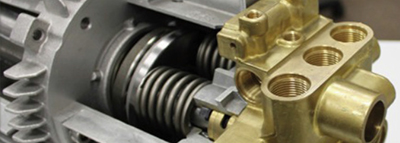
The pump head is the heart of a high pressure washer, and it works on a simple mechanical principle: reciprocating plungers.
Inside the pump head, several plungers (typically three, arranged around a rotating shaft) move back and forth in a repeating cycle, driven by the motor via a swashplate or crankshaft mechanism. On each stroke:
- The plunger retracts, drawing a small volume of water into a sealed chamber through an inlet valve.
- The plunger drives forward, sealing the inlet valve and compressing that water into a much smaller space.
- As pressure builds, an outlet valve opens and forces the pressurised water out into the high-pressure hose.
- The cycle repeats, dozens of times per second, creating a near-continuous high-pressure stream rather than a series of pulses (a well-designed pump smooths this into a steady flow you don't feel as pulsing at the nozzle).
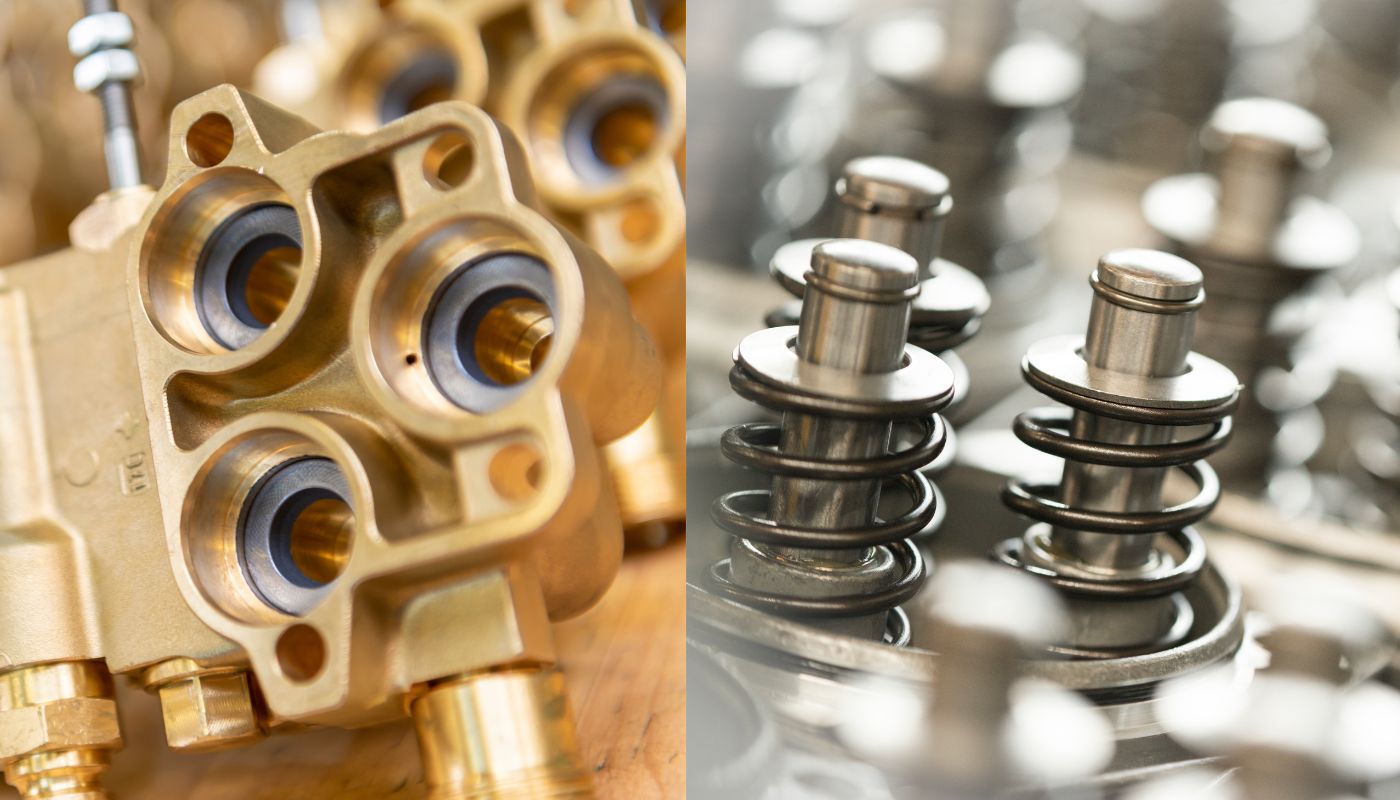
This is why pump construction matters so much. Those plungers are in constant, high-speed contact with seals and cylinder walls, thousands of times an hour, every time the machine runs. On a every Kränzle professional range pump, the plungers are ceramic-coated stainless steel — stainless steel conducts heat away efficiently (important, because friction generates real heat inside a pump running continuously), and the ceramic coating dramatically reduces wear from that constant reciprocating contact. The pump body itself is forged brass, not cast or plastic, because brass resists the corrosion that would otherwise pit the internal surfaces the plungers seal against — and once it eventually needs service, a brass pump head can be rebuilt rather than thrown away.
A plastic or aluminium pump head runs the exact same mechanical cycle, but the materials wear faster, corrode where water sits against metal, and are rarely economical to repair — which is why cheaper machines are effectively designed to be replaced rather than serviced.
The Motor: What Drives the Pump
The motor's job is straightforward — spin a shaft that drives the plungers — but how it does that has a real effect on the machine's lifespan and noise.
Cheaper machines commonly use a universal motor, running at high speed (often 2800 rpm or more). It's inexpensive to manufacture and produces plenty of power, but the internal brushes that make electrical contact wear down over time, and the higher speed means more mechanical stress on every component in the drivetrain.
Industrial and professional-grade machines — including every Kränzle unit in this category — instead use an induction motor, typically running at a slower, steadier speed around 1400 rpm. There are no brushes to wear out, the motor runs quieter, generates less heat, and lasts significantly longer under continuous daily use. A slower-running motor also improves the pump's ability to draw water in on the suction stroke, which matters when a machine is feeding from a tank or a lower-pressure water source rather than strong mains pressure.
Petrol and diesel-powered units replace the electric motor with a small combustion engine, but the mechanism from that point onward — driving the same reciprocating pump — is identical.
Bar and Litres Per Minute - How They Work Together
Once you understand the pump cycle above, the two headline numbers on every spec sheet make a lot more sense:
- Bar measures the pressure the pump generates — how hard the water is being forced out.
- Litres per minute (l/min) measures the volume of water the pump moves through that cycle in a given time — how much water is actually being delivered.
Because both figures come from the same mechanical cycle, they're linked, not independent. A pump can be tuned to produce very high pressure with a relatively small plunger stroke, or a higher flow rate with a larger one — but pushing pressure very high while flow stays low means each cleaning pass is moving less actual water across the surface, which is why an unbalanced bar-heavy, flow-light machine can lose as much as half its real-world cleaning power compared to a better-balanced unit. This is the mechanical reason behind advice you'll see in every Kränzle buying guide: don't judge a machine on bar alone.
Cold Water vs Hot Water: What Changes Mechanically
A cold water pressure washer is exactly the mechanism described above — pump, motor, done. A hot water pressure washer adds one significant component: a burner and heating coil positioned between the pump and the outlet, through which the pressurised water passes on its way to the hose. The water is already at full pressure by the time it's heated — heating doesn't happen before pressurisation, it happens after. See our guide on why choose a hote water high pressure cleaner for a deeper look at when the extrea cost is worth it.
This matters for cleaning performance because heat changes water's ability to break down grease and oil at a molecular level, something pressure alone can't achieve no matter how high the bar rating. It's also why hot water units are mechanically more complex, more expensive, and typically require a three-phase power supply — running both the pump motor and the heating element demands significantly more electrical capacity than a cold water unit of similar pressure.
From Pump to Surface: The Full Water Path
Putting the whole mechanism together, here's the complete journey a single litre of water takes through a high pressure washer:
- Enters through the inlet filter, which strips out sediment before it can damage the pump.
- Drawn into the pump chamber on the plunger's retraction stroke.
- Compressed to full operating pressure on the plunger's forward stroke.
- (On hot water units only) passed through the heating coil.
- Forced through the high-pressure hose toward the gun.
- Held back at the trigger gun until the operator pulls the trigger, opening the flow path.
- Optionally mixed with detergent, drawn in via a venturi effect created by the fast-moving water passing the injector.
- Shaped by the lance and nozzle — a narrow jet for cutting through grime, a wider fan pattern for gentler general cleaning, or a rotary nozzle for maximum mechanical scrubbing action on flat surfaces.
- Strikes the surface, where the combination of pressure (force) and flow rate (volume) does the actual cleaning work.
Safety Features Built Into the Mechanism
Two mechanical safety features are worth understanding, because they directly protect the pump described in Section 3:
Dry-run protection monitors water flow into the pump and prevents the plungers from running without water present in the chamber — without it, running the machine dry for even a short period can permanently damage the seals and plunger surfaces from friction and heat that the water would normally carry away.
Total Stop System (TST) automatically stops the motor entirely when the trigger gun is released, rather than leaving the pump running against a closed valve. This reduces wear, saves energy, and means the machine restarts instantly the next time the trigger is pulled — a small mechanical detail that has a real effect on component life over years of daily use.
Why the Mechanism Matters When You're Buying
Understanding how the machine works changes what you should actually be comparing when you're shopping:
- Pump material (brass vs plastic) tells you how long the core mechanism will survive daily contact with water and pressure cycling.
- Plunger coating (ceramic-coated stainless steel vs uncoated) tells you how much wear the machine can absorb before performance drops.
- Motor type (induction vs universal) tells you how the machine will hold up under continuous, professional-level use.
- Bar and l/min together — not bar alone — tell you the actual cleaning power for your application.
- Dry-run protection and TST tell you how well the machine is protected from everyday operator behaviour, not just from ideal use.
Two machines can list an identical bar rating and look nearly the same on a spec sheet while being built on completely different mechanisms underneath — one designed to be serviced for decades, the other designed to be replaced within a couple of years.
Common Misunderstandings About How Pressure Washers Work
- "Higher bar always means more powerful." Not without matching flow rate — see Section 5.
- "The motor creates the pressure." The motor only provides rotational power; the pump head is what actually converts that into water pressure.
- "Hot water washers heat the water before pressurising it." It's the reverse — water is pressurised first, then heated on its way out.
- "All pumps are basically the same, so price differences are just markup." Pump material and plunger coating directly determine service life; the price difference reflects real engineering and manufacturing cost, not just brand premium.
- "A pressure washer with no dry-run protection is fine as long as I'm careful." Human error across multiple operators or shifts is common enough in commercial and industrial settings that this feature earns its cost quickly.
Frequently Asked Questions
What creates the pressure in a pressure washer?
A pump containing several reciprocating plungers, driven by the motor, that compress water into a much smaller volume on each stroke.
Does the motor pressurise the water directly?
No. The motor only spins the pump's drive shaft — the pump head itself, through the plunger mechanism, is what actually generates pressure.
Why do some pressure washers use three plungers?
A three-plunger arrangement, offset in their cycle, smooths out the pressure delivery so the output feels like a steady stream rather than a series of pulses.
What's the difference between bar and PSI?
Both measure pressure — PSI (pounds per square inch) is the imperial unit, bar is the metric equivalent. 1 bar ≈ 14.5 PSI.
Does a higher-pressure pump use more water?
Not necessarily — pressure and flow rate are set by the pump's design and can be tuned somewhat independently, which is why two machines with the same bar rating can have very different l/min figures.
How does a pressure washer heat water?
Via a burner and heating coil positioned after the pump, so the water is already pressurised before it's heated.
Why does my pressure washer lose pressure over time?
Usually worn plungers or seals inside the pump, a clogged inlet filter, or a partially blocked nozzle — all mechanical wear points described in Section 3.
What happens if you run a pressure washer without water?
The plungers and seals run dry against each other, generating heat and friction the water would normally dissipate, which can cause permanent damage within minutes — this is exactly what dry-run protection is designed to prevent.
Why do pressure washers need an inlet filter?
Sediment in the water supply can score the plunger surfaces and damage seals inside the pump on every single cycle, so filtering it out before it reaches the pump chamber is essential to pump longevity.
What is a Total Stop System (TST)?
A mechanism that automatically stops the motor when the trigger is released and restarts it instantly when triggered again, reducing wear and energy use during intermittent operation.
Why is bar rating alone not a good way to compare pressure washers?
Because cleaning performance depends on pressure and flow rate together — a high-bar, low-flow machine can deliver noticeably less real-world cleaning power than a better-balanced one.
How does the detergent injector work?
It uses the venturi effect — fast-moving water passing the injector creates a pressure drop that draws detergent in from a separate container and mixes it into the stream.
Do petrol pressure washers work differently to electric ones?
Only in what drives the pump — a combustion engine instead of an electric motor. The pump mechanism that actually generates pressure is the same in both.
Why does pump material (brass vs plastic) matter mechanically?
Because the pump housing is in constant contact with pressurised water and moving plungers — brass resists the corrosion and wear that plastic or aluminium housings are prone to under the same cycling.
Summary
A high pressure washer's entire job comes down to one mechanical action, repeated many times a second: reciprocating plungers inside a pump head take in low-pressure water and force it out at dramatically higher pressure, driven by a motor or engine. Everything else on the machine — the hose, gun, lance, nozzle, detergent injector, and safety systems — exists to control and direct that pressurised water once the pump has done its work.
Understanding this mechanism is what turns a confusing spec sheet into a genuinely comparable set of engineering choices. When you know that the pump and motor are where lifespan and reliability are actually decided, you can look past a headline bar number and ask the questions that matter: what's the pump made from, what drives it, and is the pressure backed by enough flow to do real work.
Want to see this engineering in a real machine? Browse Kränzle's Professional range, read our Buyer's Guide to match a machine to your application, or request a quote and our technical team will help you choose the right pump, motor, and power type for your needs.