Free Shipping on orders over R3,999. T's&C's Apply.

Solar Panel Cleaning Equipment
Water-driven SOLA-TECS brushes on full carbon fibre poles. Manufactured by Cleantecs in Germany, supplied and serviced in South Africa by Kränzle.
View all products › Request a quote ›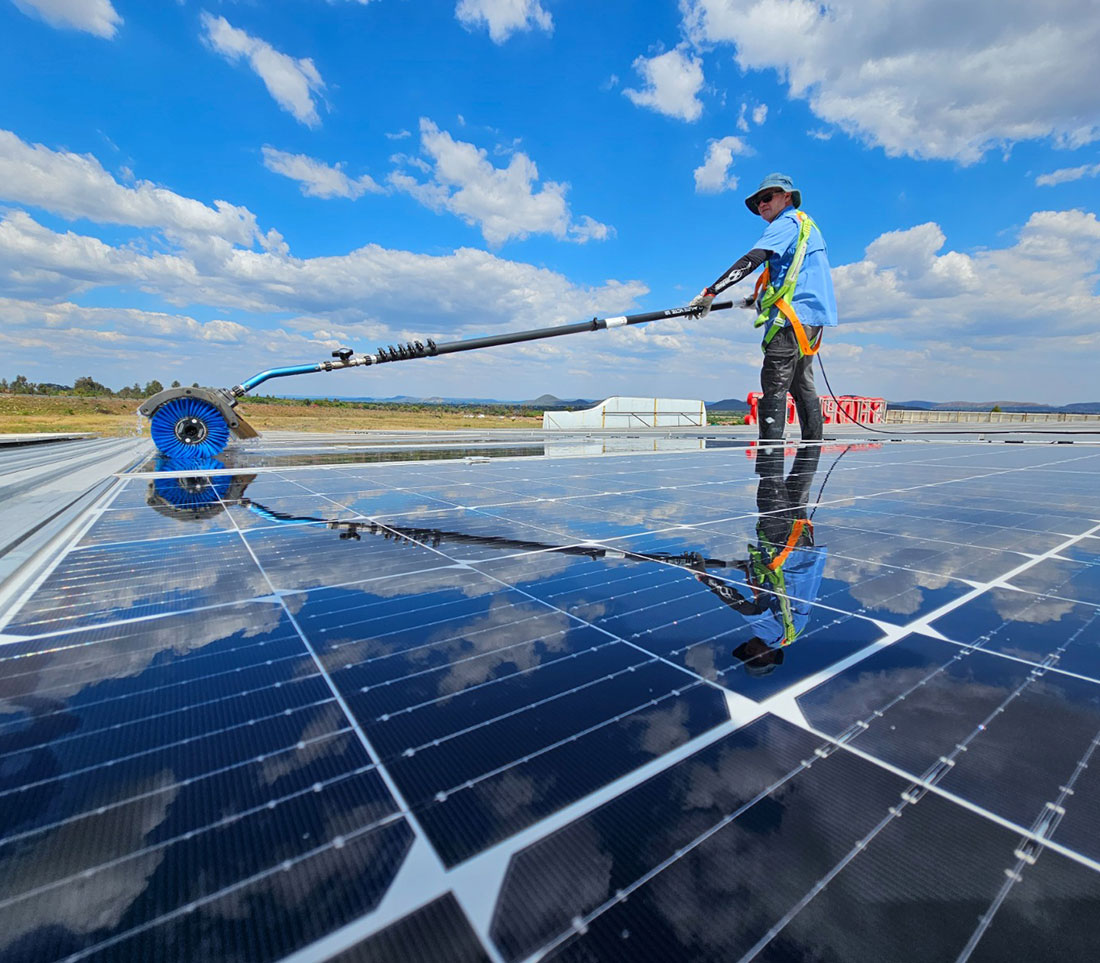
Kränzle South Africa supplies the Cleantecs SOLA-TECS range of solar panel cleaning equipment: water-driven rotary brushes, full carbon fibre poles and complete cleaning sets. Cleantecs manufactures the range in Germany, and Kränzle South Africa is the authorised South African distributor, holding local stock, spares and service.
Why solar panels are cleaned
Dust, pollen, bird droppings and agricultural or industrial fallout sit on the glass and block light before it reaches the cell, so a soiled array produces less than a clean one. Uneven soiling is worse than an even layer: a shaded strip creates localised shading, and that produces hot spots on the panel surface. The uneven heating puts the module under thermal stress, which can cause localised damage and shorten its working life. Keeping the glass clear therefore protects both the energy yield and the life of the installation.
Which system suits the installation
Three things decide the specification: the panel area, how high the array sits, and whether the roof can be walked on. Everything else follows from those.
- Domestic and small rooftop arrays. The manual SOLA Brush, with five spray nozzles and an adjustable head, on a modular carbon pole. Supplied ready to run as one of the solar panel cleaning sets.
- Commercial rooftops and mid-size grounds. The SOLA-TECS C800 water-driven rotary head at 820 mm, cleaning 300 m² per hour. It is the most used size in South Africa, and some local operators clean up to 1,000 panels a day with it. Widths and specifications: solar panel cleaning brushes.
- Large and utility-scale installations. The C1000 covers the most ground per pass. Where the pitch is too steep to stand on, or the rows have no walkway between them, the work is done from the ground on a 12 m telescopic solar panel cleaning pole.
Shop by category
Professional equipment engineered for efficient, safe and reliable solar panel cleaning.
Solar Panel Cleaning Sets Complete, ready-to-run systems for professional solar panel cleaning. » Solar Panel Cleaning Brushes High-performance rotary brushes, SOLA-TECS C400 to C1000. » Solar Panel Pole Systems Lightweight carbon fibre poles for safe, efficient high-level cleaning. » View all solar panel cleaning equipment Every brush, pole, set, washer and accessory in one list. »
How the SOLA-TECS system works
The SOLA-TECS C is a motorless, water-driven rotary brush. The high-pressure washer that feeds it does two jobs at once: the water turns impellers inside the gear head, which spin the brush at approximately 700 rpm, while the same water rinses the panel. With no electric motor on the pole, the head stays light and there is less to fail in the field. The brush works at a controlled 100 to 120 bar, firm enough to lift bonded dirt and gentle enough for panel glass and coatings, and the soft PA 6.10 nylon bristles are made for the surface. The operator works vertically, moving the head away and back again, never sideways across the panel.
Choosing a brush width
Cleaning width is the decision that sizes the job. A wider head covers more panel per pass but is more to control at full pole extension, so the right width is the widest one the access allows.
| Brush | Cleaning width | Area output | Typical application |
|---|---|---|---|
| SOLA Brush 400 / 580 | 400 mm / 580 mm | Manual | Domestic roofs, and finishing panel edges on large sites |
| SOLA-TECS C400 | 420 mm | 150 m²/h | Tight access and narrow rows |
| SOLA-TECS C600 | 620 mm | 250 m²/h | Smaller arrays, and where water use must be kept down |
| SOLA-TECS C800 | 820 mm | 300 m²/h | Commercial rooftops and mid-size grounds. The most used size in South Africa |
| SOLA-TECS C1000 | 1,020 mm | 350 m²/h | Large and utility-scale field |
Working pressure, water consumption, brush diameter, gearbox version, nozzle options and item codes for every model: solar panel cleaning brushes.
Carbon fibre poles and working from the ground
The pole is what puts the brush on the panel without putting a person on the roof. SOLA-LITE poles are full carbon fibre, light enough to hold at full extension and stiff enough to keep the brush flat on the glass. Two systems: modular poles build up from 1.8 m sections for moderate reach, and the telescopic lance extends continuously to 12 m for steep pitches and for ground-mount rows with no walkway between them.
Reach per configuration, weights and the fall-protection rule on converting a 12 m pole: solar panel cleaning poles
Matching the high-pressure washer
The washer drives the brush, so flow is what decides the pairing. The standard size 1.2 nozzle draws approximately 9.2 l/min, and the SOLA-TECS C works best with around 10 l/min at 120 bar. The Kränzle HD 11/130 TS is the most recommended machine for commercial work because the higher flow keeps brush rotation stable across a full working day. The compact Kränzle HD 7/122 TS is the water-efficient option for smaller installations where supply or filtration capacity is a consideration. Where there is no mains power, the petrol Kränzle B13/150 runs the same work off a Honda engine.
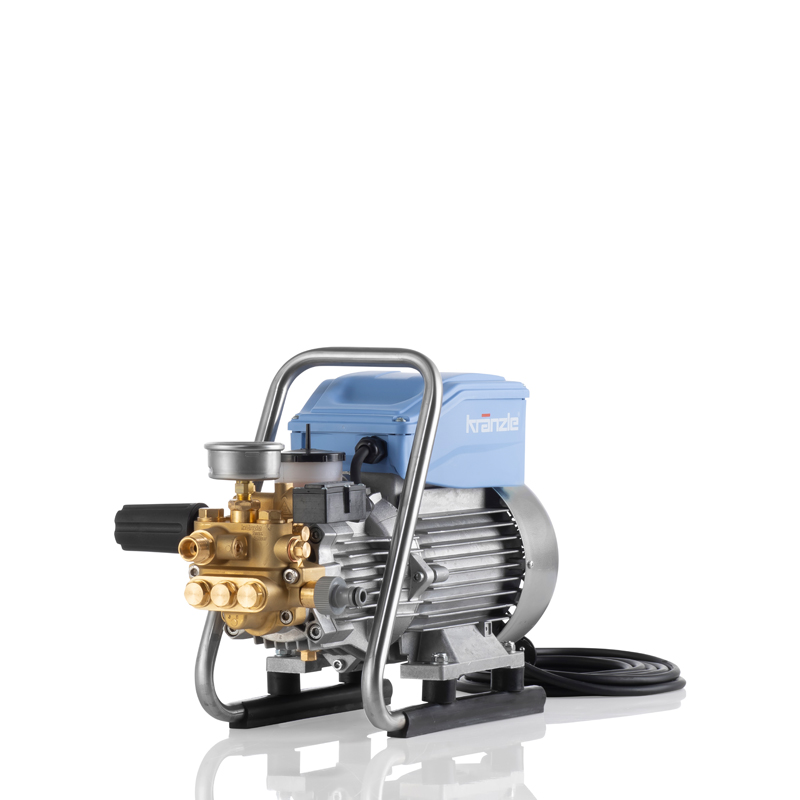 Kränzle HD 11/130 TS
Most recommended for the SOLA-TECS C. The higher flow keeps brush rotation stable across medium to large installations.
Kränzle HD 11/130 TS
Most recommended for the SOLA-TECS C. The higher flow keeps brush rotation stable across medium to large installations.
Water flow 11 l/min
Working pressure 130 bar
Motor speed 1,400 r.p.m.
Connection 230 V
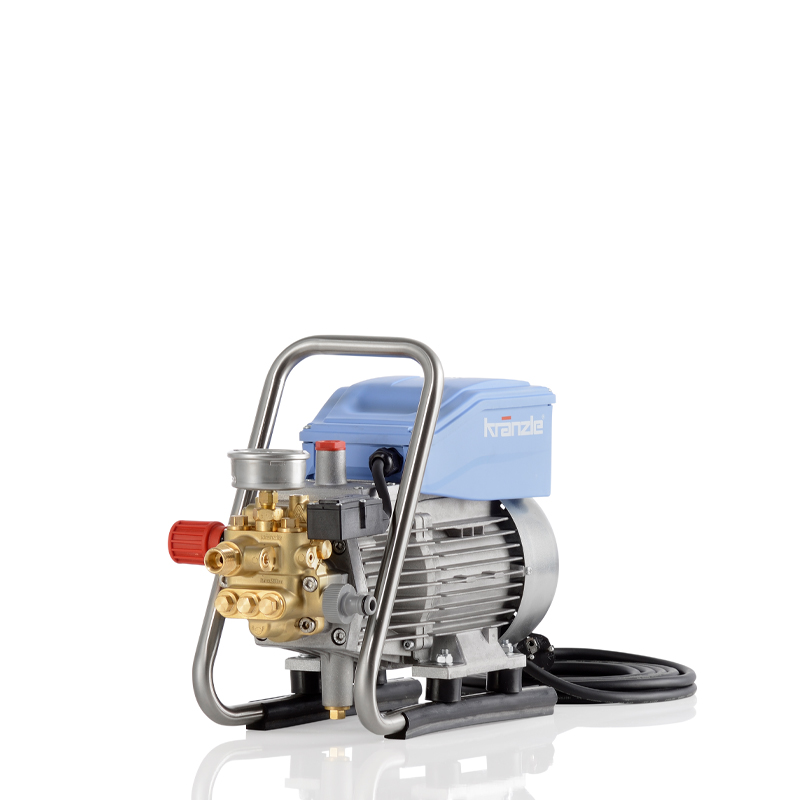 Kränzle HD 7/122 TS
Compact and water-efficient, for smaller installations and sites where water supply or filtration capacity is a consideration.
Kränzle HD 7/122 TS
Compact and water-efficient, for smaller installations and sites where water supply or filtration capacity is a consideration.
Water flow 7 l/min
Working pressure 120 bar
Motor speed 1,400 r.p.m.
Connection 230 V
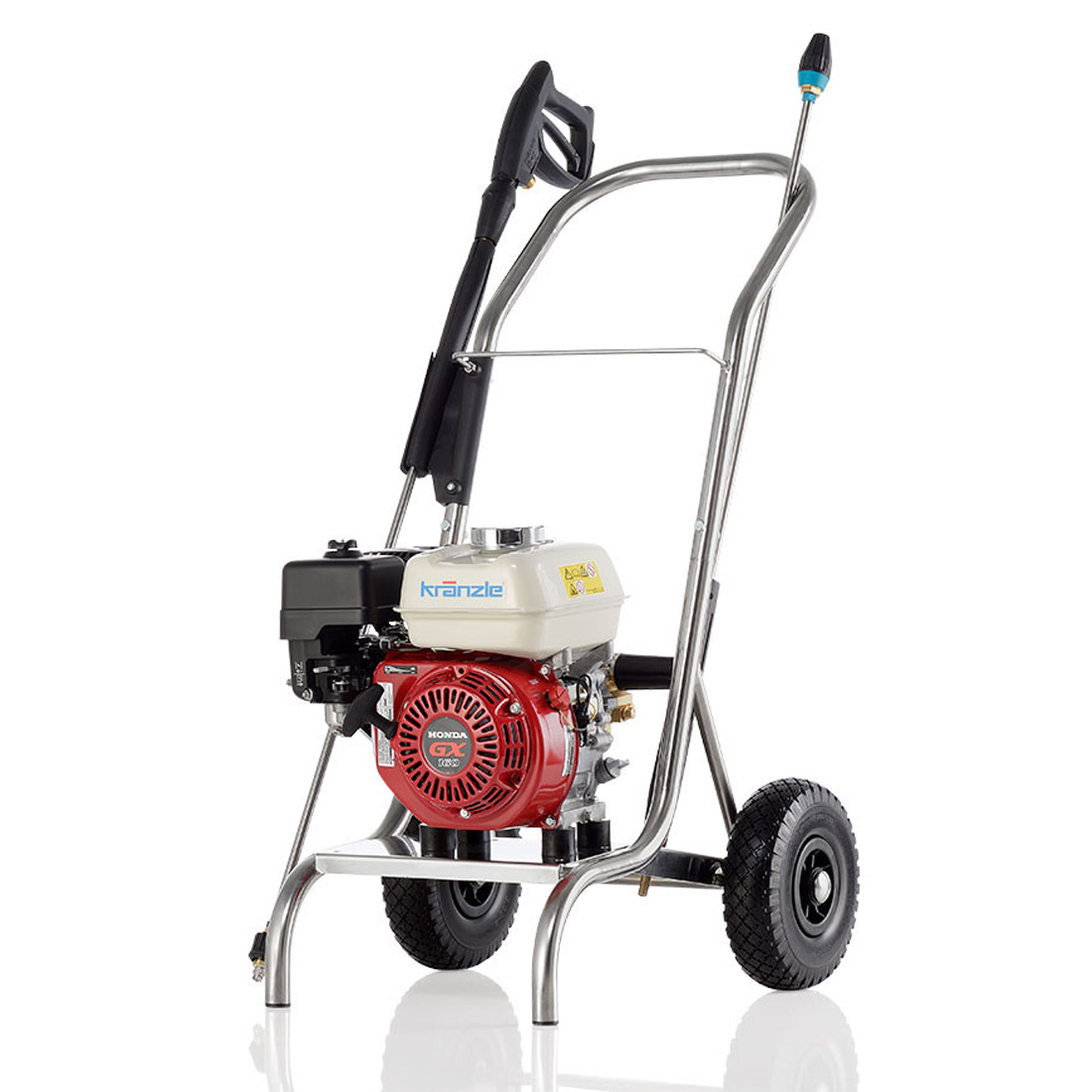 Kränzle B13/150 Honda
Petrol-driven, for sites with no mains power. At 13 l/min it has the flow to hold rotation on the widest heads, on a stainless steel trolley.
Kränzle B13/150 Honda
Petrol-driven, for sites with no mains power. At 13 l/min it has the flow to hold rotation on the widest heads, on a stainless steel trolley.
Water flow 13 l/min
Working pressure 30-150 bar
Engine Honda GX160 LX
Fuel Unleaded petrol
Water quality for solar panel cleaning
Professional operators work with pure water, also called deionised or demineralised water, produced by a de-ionised resin filter system or by reverse osmosis. Pure water carries no dissolved minerals, so the glass dries clear instead of drying to streaks and spots. For the SOLA-TECS C it is a requirement rather than a preference: maximum conductivity 30 µS/cm, with a high-pressure filter always fitted. The same filtration protects the turbine gear head, where untreated water causes abrasive wear.
Buying a complete system
Every part is sold on its own, and every part is also sold in a matched kit with the pole, gooseneck, brush and 25 m hose already paired. A kit removes the sizing question for anyone starting out or replacing a whole system at once.
What is in each of the five kits, from single-pole domestic to the 12 m telescopic set: solar panel cleaning sets
Frequently asked questions
Which SOLA-TECS model should I choose?
We recommend the SOLA-TECS C800. It is the most popular size used in South Africa and cleans 300 m² per hour, and at 820 mm it is the middle ground that handles almost any job. The SOLA Brush suits small domestic roofs, and the C1000 covers the most ground per pass on utility-scale farms.
What equipment do I need to start a solar panel cleaning business?
Four things: a brush, a pole to carry it, a high-pressure washer to drive it, and water treatment. The usual starting configuration in South Africa is a SOLA-TECS C800 brush on a carbon fibre pole, a Kränzle HD 11/130 TS washer at 11 l/min and 130 bar, a high-pressure filter fitted, and demineralised water below 30 µS/cm.
Will a cleaning brush scratch my solar panels?
No. The SOLA-TECS and SOLA brushes use soft PA 6.10 nylon bristles designed for panel glass and coatings, and the rotary head works at a controlled 100 to 120 bar. Working vertically, away and back rather than sideways, cleans the surface without abrasion.
Do I need pure water to clean solar panels?
For the SOLA-TECS C, yes: demineralised water below 30 µS/cm conductivity, with a high-pressure filter fitted. Pure water dries streak-free with no mineral spotting, and it protects the turbine gear head from the abrasive wear that untreated water causes.
Can I use any pressure washer with the SOLA-TECS brush?
It must sustain the flow that spins the brush. The standard nozzle draws about 9.2 l/min, so the SOLA-TECS C works best with around 10 l/min at 120 bar. Kränzle recommends the HD 11/130 TS for most work, the compact HD 7/122 TS where water use matters, and the petrol B13/150 where there is no mains power.
How often should solar panels be cleaned?
It depends on the site. Arid and dusty regions soil fastest because there is no rain to self-clean, agricultural and coastal locations soil faster than clean suburban roofs, and low-tilt panels accumulate more than steeply angled ones. Sites with heavy bird activity need more frequent attention.
Is Kränzle the manufacturer of these systems?
No. The SOLA-TECS brushes and SOLA-LITE poles are manufactured by Cleantecs in Germany. Kränzle South Africa is the authorised South African distributor and provides local stock, spares and service.